Optimizing a large-scale bioreactor is one of the most consequential - and most constrained - challenges in biopharma manufacturing. The stakes are high: monoclonal antibodies (mAbs) and other biologics are among the most valuable products in medicine, with commercialized oncology mAbs valued at $500 to $2,000 per milliliter. Even incremental improvements in yield, quality, or cycle time translate directly to patient access and bottom-line impact.
But in a GMP environment, the traditional path to optimization - experimental design of experiments (DOE) - is often neither feasible nor affordable. Cell culture media, process time, and regulatory risk all make large-scale physical experimentation a costly gamble.
That's exactly the challenge a leading pharmaceutical company brought to a collaboration with Procegence.
The problem: a 20,000-liter mAb bioreaction process running in an existing GMP facility. Major equipment modifications weren’t possible. Media, cell biology, and tank geometry were fixed. The optimization targets - improved kLa, reduced process time, increased yield - had to be achieved entirely through adjustments to aeration rate (VVM), agitation speed (RPM), and impeller stack configuration.
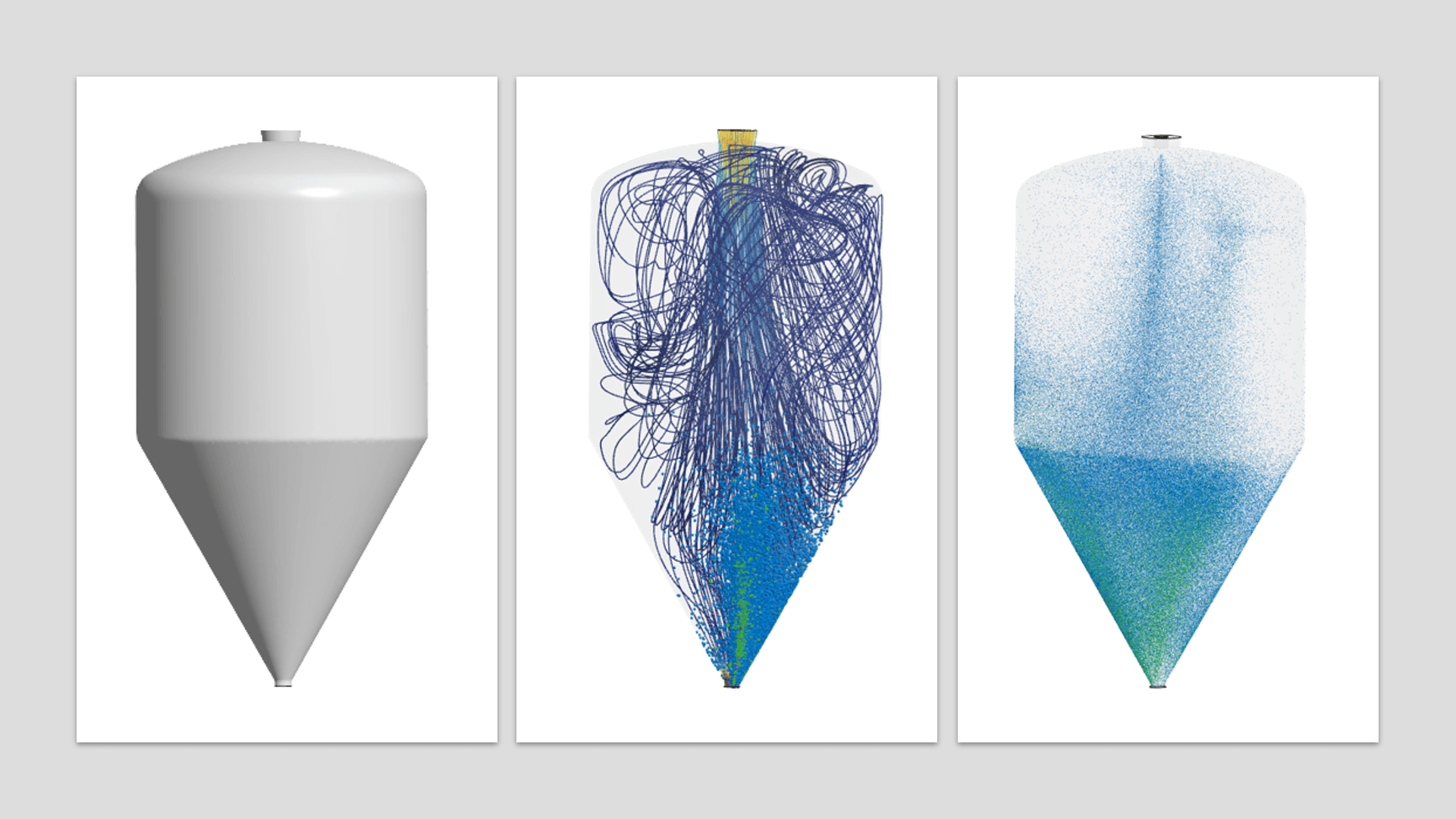
The approach: Rather than running physical experiments, Procegence deployed a high-fidelity, multiphysics CFD model using Siemens Star-CCM+. The model captured multiphase gas-liquid dynamics, bubble size distribution, mass transfer, and shear - all the phenomena that govern cell health and oxygen delivery at scale.
From there, a 147-case multidimensional virtual DOE was executed across the full parameter space in just 36 hours using high-performance computing. The results mapped the true nonlinear relationships between VVM, RPM, impeller design, kLa, and shear - revealing a viable operating space bounded by cell damage on one side and insufficient mass transfer on the other.
A subsequent optimization study using the SHERPA algorithm ran 200 additional cases to identify the global optimum - accounting for all physics and biological constraints - in 72 hours.
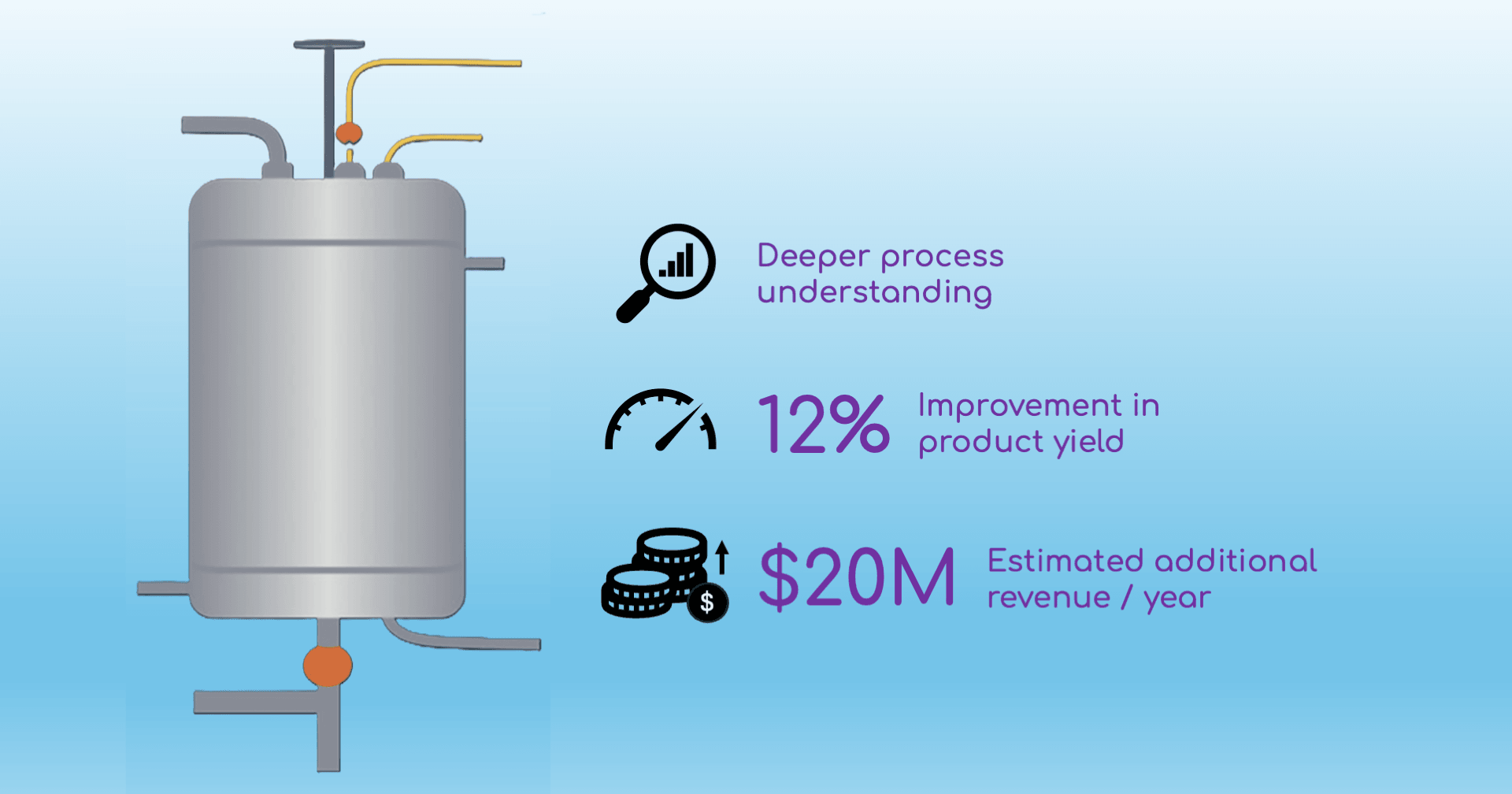
The outcomes speak for themselves:
- Deeper process understanding directly applicable to day-to-day operations
- 12% improvement in product yield
- Estimated $20 million per year in additional revenue
No capital investment. No experimental risk. No GMP disruption.
This is what simulation-based process development and optimization delivers at scale: the ability to explore, understand, and optimize a complex bioprocess virtually - and implement with confidence.
Read the full white paper to see the complete model setup, parameter space analysis, design space visualization, and optimization methodology.